Details
-
Type:
Task
-
Status: Closed (View Workflow)
-
Priority:
 Major
Major
-
Resolution: Done
-
Affects Version/s: None
-
Fix Version/s: None
-
Labels:None
-
Story Points:2
Description
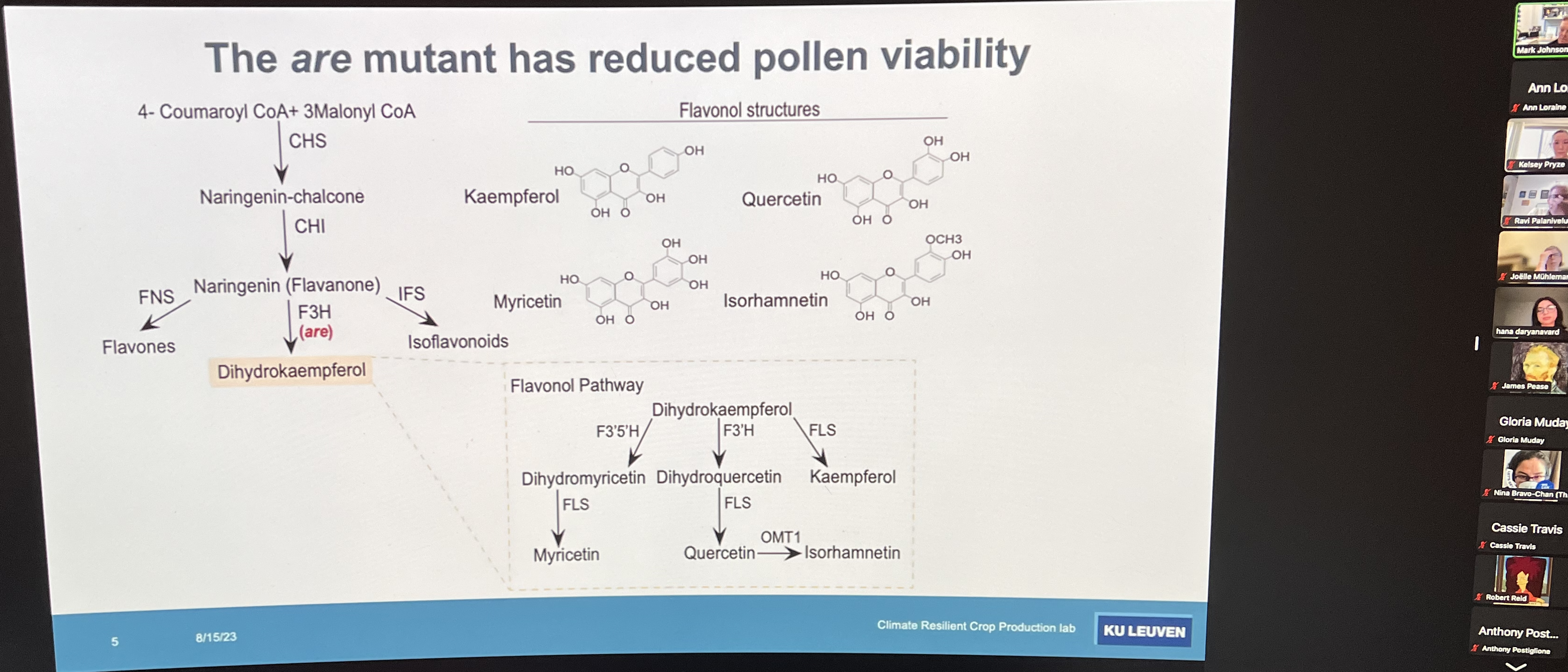
See attached slide, from group meeting presentation August 15, 2023 from Muhlemann lab (Climate Resilient Crop Production lab, PI Joëlle Muhlemann).
It would be nice to investigate how or if enzymes involved flavonoid biosynthesis are differentially expressed in response to the heat stress treatment. To do that, it would help if we knew the SL4 and SL5 genes that might encode these enzymes. If we knew that, we could very easily test for over- or under-enrichment of these genes in the DE gene set or the expressed gene set in our target tissue.
Desired product: xlsx (MS Excel) spreadsheet document with columns:
- enzyme acronym (e.g., CHS, F3'5'H, FNS)
- longer name of the enzyme / enzymatic activity
- enzymatic product (e.g., naringenin-chalcone)
- gene symbol (e.g., "are" or "NA" if there's no genetic characterization, known mutants, etc)
- SL4 or SL5 gene name
- whether the previous column is from SL4 or SL5 ("SL4", "SL5" are the two possible values)
Attachments
Activity
| Field | Original Value | New Value |
|---|---|---|
| Epic Link | IGBF-2993 [ 21429 ] |
| Description |
See attached slide, from group meeting presentation August 15, 2023 from Muhlemann lab (Climate Resilient Crop Production lab, PI Joëlle Muhlemann).
Identify the SL4 and SL5 genes encoding these enzymes. |
See attached slide, from group meeting presentation August 15, 2023 from Muhlemann lab (Climate Resilient Crop Production lab, PI Joëlle Muhlemann).
Identify the SL4 and SL5 genes encoding these enzymes. Products: * spreadsheet with columns: # enzyme acronym (e.g., CHS, F3'5'H, FNS, names on the arrows) # enzymatic product (e.g., naringenin-chalcone) # gene symbol (e.g., "are" or "NA" if there's no genetic characterization, known mutants, etc) # SL4 or SL5 gene name # whether the previous column is from SL4 or SL5 Note: * Some SL4 genes have no known counterpart in SL5, and vice versa. * One enzyme may be encoded by zero or many genes in SL4 * One enzyme may be encoded by zero or more genes in SL5 I recommend not using mappings from SL4 onto SL5 as a way to annotate gene names here. Those mappings come from a process we do not know a lot about. It might be wrong. It would be better to apply the same method to SL4 and SL5 protein sets separately from each other. That way, errors in SL4 will not propagate to SL5, and vice versa. Each step in creating this product should be documented so that we can explain it, sanity-check it, etc. |
| Description |
See attached slide, from group meeting presentation August 15, 2023 from Muhlemann lab (Climate Resilient Crop Production lab, PI Joëlle Muhlemann).
Identify the SL4 and SL5 genes encoding these enzymes. Products: * spreadsheet with columns: # enzyme acronym (e.g., CHS, F3'5'H, FNS, names on the arrows) # enzymatic product (e.g., naringenin-chalcone) # gene symbol (e.g., "are" or "NA" if there's no genetic characterization, known mutants, etc) # SL4 or SL5 gene name # whether the previous column is from SL4 or SL5 Note: * Some SL4 genes have no known counterpart in SL5, and vice versa. * One enzyme may be encoded by zero or many genes in SL4 * One enzyme may be encoded by zero or more genes in SL5 I recommend not using mappings from SL4 onto SL5 as a way to annotate gene names here. Those mappings come from a process we do not know a lot about. It might be wrong. It would be better to apply the same method to SL4 and SL5 protein sets separately from each other. That way, errors in SL4 will not propagate to SL5, and vice versa. Each step in creating this product should be documented so that we can explain it, sanity-check it, etc. |
See attached slide, from group meeting presentation August 15, 2023 from Muhlemann lab (Climate Resilient Crop Production lab, PI Joëlle Muhlemann).
Identify the SL4 and SL5 genes encoding these enzymes. Desired product: * 1 xlsx (MS Excel) spreadsheet document with columns: # enzyme acronym (e.g., CHS, F3'5'H, FNS, names on the arrows) # enzymatic product (e.g., naringenin-chalcone) # gene symbol (e.g., "are" or "NA" if there's no genetic characterization, known mutants, etc) # SL4 or SL5 gene name # whether the previous column is from SL4 or SL5 ("SL4", "SL5" are the two possible values) Note: Don't use mappings from SL4 onto SL5 as a way to annotate gene names here. Those mappings come from a process we do not know a lot about. It might be wrong. It would be better to develop and apply the same method to SL4 and SL5 protein sets separately from each other. That way, errors in SL4 will not propagate to SL5, and vice versa. Each step in creating this product should be documented so that we can explain it, sanity-check it, etc. |
| Description |
See attached slide, from group meeting presentation August 15, 2023 from Muhlemann lab (Climate Resilient Crop Production lab, PI Joëlle Muhlemann).
Identify the SL4 and SL5 genes encoding these enzymes. Desired product: * 1 xlsx (MS Excel) spreadsheet document with columns: # enzyme acronym (e.g., CHS, F3'5'H, FNS, names on the arrows) # enzymatic product (e.g., naringenin-chalcone) # gene symbol (e.g., "are" or "NA" if there's no genetic characterization, known mutants, etc) # SL4 or SL5 gene name # whether the previous column is from SL4 or SL5 ("SL4", "SL5" are the two possible values) Note: Don't use mappings from SL4 onto SL5 as a way to annotate gene names here. Those mappings come from a process we do not know a lot about. It might be wrong. It would be better to develop and apply the same method to SL4 and SL5 protein sets separately from each other. That way, errors in SL4 will not propagate to SL5, and vice versa. Each step in creating this product should be documented so that we can explain it, sanity-check it, etc. |
See attached slide, from group meeting presentation August 15, 2023 from Muhlemann lab (Climate Resilient Crop Production lab, PI Joëlle Muhlemann).
Identify the SL4 and SL5 genes encoding these enzymes. Desired product: * 1 xlsx (MS Excel) spreadsheet document with columns: # enzyme acronym (e.g., CHS, F3'5'H, FNS, names on the arrows from the slide) # enzymatic product (e.g., naringenin-chalcone) # gene symbol (e.g., "are" or "NA" if there's no genetic characterization, known mutants, etc) # SL4 or SL5 gene name # whether the previous column is from SL4 or SL5 ("SL4", "SL5" are the two possible values) Note: Don't use mappings from SL4 onto SL5 as a way to annotate gene names here. Those mappings come from the people who made the SL5 assembly. They might be wrong. It would be better to develop and apply an enzyme assignment method and use it on SL4 and SL5 protein annotations separately from each other. That way, errors in SL4 will not propagate to SL5, and vice versa. Each step in creating this product should be documented so that we can explain it, sanity-check it, etc. |
| Sprint | Summer 8 2023 Aug 21 [ 177 ] | Testing 2 : 4 Nov - 15 Nov [ 82 ] |
Next Steps:
- Create a spreadsheet with the above description steps 1-3 with the use of the slide image
- Have a meeting with muday lab to show example spreadsheet and share idea
- Use Plantcyc (tomatocyc) to identify the last two column in the spreadsheet 4-5
| Description |
See attached slide, from group meeting presentation August 15, 2023 from Muhlemann lab (Climate Resilient Crop Production lab, PI Joëlle Muhlemann).
Identify the SL4 and SL5 genes encoding these enzymes. Desired product: * 1 xlsx (MS Excel) spreadsheet document with columns: # enzyme acronym (e.g., CHS, F3'5'H, FNS, names on the arrows from the slide) # enzymatic product (e.g., naringenin-chalcone) # gene symbol (e.g., "are" or "NA" if there's no genetic characterization, known mutants, etc) # SL4 or SL5 gene name # whether the previous column is from SL4 or SL5 ("SL4", "SL5" are the two possible values) Note: Don't use mappings from SL4 onto SL5 as a way to annotate gene names here. Those mappings come from the people who made the SL5 assembly. They might be wrong. It would be better to develop and apply an enzyme assignment method and use it on SL4 and SL5 protein annotations separately from each other. That way, errors in SL4 will not propagate to SL5, and vice versa. Each step in creating this product should be documented so that we can explain it, sanity-check it, etc. |
See attached slide, from group meeting presentation August 15, 2023 from Muhlemann lab (Climate Resilient Crop Production lab, PI Joëlle Muhlemann).
Identify the SL4 and SL5 genes encoding these enzymes. Desired product: xlsx (MS Excel) spreadsheet document with columns: # enzyme acronym (e.g., CHS, F3'5'H, FNS, names on the arrows from the slide) # enzymatic product (e.g., naringenin-chalcone) # gene symbol (e.g., "are" or "NA" if there's no genetic characterization, known mutants, etc) # SL4 or SL5 gene name # whether the previous column is from SL4 or SL5 ("SL4", "SL5" are the two possible values) Note: Don't use mappings from SL4 onto SL5 as a way to annotate gene names here. Those mappings come from the people who made the SL5 assembly. They might be wrong. It would be better to develop and apply an enzyme assignment method and use it on SL4 and SL5 protein annotations separately from each other. That way, errors in SL4 will not propagate to SL5, and vice versa. Each step in creating this product should be documented so that we can explain it, sanity-check it, etc. |
Planning for group meeting presentation today:
- RR makes a presentation in google drive
- team adds to and edits it
Notes from meeting:
- Shiny app that would provide a pathway chooser which would know the genes associated with the pathway and show the expression levels (heat map) from a given dataset of those genes.
- Work with James Pease Lab to determine Annotation work needed or provide our own smaller version instead from tomato group only
Presentation was made.
Lengthy discussion ensued !!
Copy of the presentation can be found here:
https://docs.google.com/presentation/d/1kWJnZlbsW6SElp9TH1gaY4x8F-zIJKskN98Y6iIzFzs/edit?usp=drive_link
We found out about Jame's MASSIVE annotation efforts. He shared with us his massive spread sheet, where each tab is a gene classification of some sort.
He has BUSCO scores for the tomato orthologs that match the BUSCO genes.
Jame's Google sheet of anotations:
https://docs.google.com/spreadsheets/d/1NFqsAPT394mmkLCI9eAFYK798Ym0UfSIWpjRCs9bdQU/edit?usp=sharing
| Story Points | 5 | 2 |
| Description |
See attached slide, from group meeting presentation August 15, 2023 from Muhlemann lab (Climate Resilient Crop Production lab, PI Joëlle Muhlemann).
Identify the SL4 and SL5 genes encoding these enzymes. Desired product: xlsx (MS Excel) spreadsheet document with columns: # enzyme acronym (e.g., CHS, F3'5'H, FNS, names on the arrows from the slide) # enzymatic product (e.g., naringenin-chalcone) # gene symbol (e.g., "are" or "NA" if there's no genetic characterization, known mutants, etc) # SL4 or SL5 gene name # whether the previous column is from SL4 or SL5 ("SL4", "SL5" are the two possible values) Note: Don't use mappings from SL4 onto SL5 as a way to annotate gene names here. Those mappings come from the people who made the SL5 assembly. They might be wrong. It would be better to develop and apply an enzyme assignment method and use it on SL4 and SL5 protein annotations separately from each other. That way, errors in SL4 will not propagate to SL5, and vice versa. Each step in creating this product should be documented so that we can explain it, sanity-check it, etc. |
See attached slide, from group meeting presentation August 15, 2023 from Muhlemann lab (Climate Resilient Crop Production lab, PI Joëlle Muhlemann).
Identify the SL4 and SL5 genes encoding these enzymes. Desired product: xlsx (MS Excel) spreadsheet document with columns: # enzyme acronym (e.g., CHS, F3'5'H, FNS, names on the arrows from the slide) # enzymatic product (e.g., naringenin-chalcone) # gene symbol (e.g., "are" or "NA" if there's no genetic characterization, known mutants, etc) # SL4 or SL5 gene name # whether the previous column is from SL4 or SL5 ("SL4", "SL5" are the two possible values) |
| Sprint | Fall 1 - Sep 5 [ 82 ] |
| Description |
See attached slide, from group meeting presentation August 15, 2023 from Muhlemann lab (Climate Resilient Crop Production lab, PI Joëlle Muhlemann).
Identify the SL4 and SL5 genes encoding these enzymes. Desired product: xlsx (MS Excel) spreadsheet document with columns: # enzyme acronym (e.g., CHS, F3'5'H, FNS, names on the arrows from the slide) # enzymatic product (e.g., naringenin-chalcone) # gene symbol (e.g., "are" or "NA" if there's no genetic characterization, known mutants, etc) # SL4 or SL5 gene name # whether the previous column is from SL4 or SL5 ("SL4", "SL5" are the two possible values) |
See attached slide, from group meeting presentation August 15, 2023 from Muhlemann lab (Climate Resilient Crop Production lab, PI Joëlle Muhlemann).
It would be nice to investigate how or if enzymes involved flavonoid biosynthesis are differentially expressed in response to the heat stress treatment. To do that, it would help if we knew the SL4 and SL5 genes that might encode these enzymes. If we knew that, we could very easily test for over- or under-enrichment of these genes in the DE gene set or the expressed gene set in our target tissue. Desired product: xlsx (MS Excel) spreadsheet document with columns: # enzyme acronym (e.g., CHS, F3'5'H, FNS, names on the arrows from the slide) # enzymatic product (e.g., naringenin-chalcone) # gene symbol (e.g., "are" or "NA" if there's no genetic characterization, known mutants, etc) # SL4 or SL5 gene name # whether the previous column is from SL4 or SL5 ("SL4", "SL5" are the two possible values) |
| Description |
See attached slide, from group meeting presentation August 15, 2023 from Muhlemann lab (Climate Resilient Crop Production lab, PI Joëlle Muhlemann).
It would be nice to investigate how or if enzymes involved flavonoid biosynthesis are differentially expressed in response to the heat stress treatment. To do that, it would help if we knew the SL4 and SL5 genes that might encode these enzymes. If we knew that, we could very easily test for over- or under-enrichment of these genes in the DE gene set or the expressed gene set in our target tissue. Desired product: xlsx (MS Excel) spreadsheet document with columns: # enzyme acronym (e.g., CHS, F3'5'H, FNS, names on the arrows from the slide) # enzymatic product (e.g., naringenin-chalcone) # gene symbol (e.g., "are" or "NA" if there's no genetic characterization, known mutants, etc) # SL4 or SL5 gene name # whether the previous column is from SL4 or SL5 ("SL4", "SL5" are the two possible values) |
See attached slide, from group meeting presentation August 15, 2023 from Muhlemann lab (Climate Resilient Crop Production lab, PI Joëlle Muhlemann).
It would be nice to investigate how or if enzymes involved flavonoid biosynthesis are differentially expressed in response to the heat stress treatment. To do that, it would help if we knew the SL4 and SL5 genes that might encode these enzymes. If we knew that, we could very easily test for over- or under-enrichment of these genes in the DE gene set or the expressed gene set in our target tissue. Desired product: xlsx (MS Excel) spreadsheet document with columns: # enzyme acronym (e.g., CHS, F3'5'H, FNS) # longer name of the enzyme / enzymatic activity # enzymatic product (e.g., naringenin-chalcone) # gene symbol (e.g., "are" or "NA" if there's no genetic characterization, known mutants, etc) # SL4 or SL5 gene name # whether the previous column is from SL4 or SL5 ("SL4", "SL5" are the two possible values) |
Sent email to Muday lab and our internal group:
Hello all,
This is mainly a question for Muday lab. Do you think you would be available or interested in taking on the following task?
It would be nice to investigate how or if enzymes involved in flavonoid biosynthesis are differentially expressed in response to the heat stress treatment. To do that, it would help if we knew which annotated gene models might encode these enzymes. If we knew that, we could very easily test for over- or under-enrichment of these genes in the DE gene set.
To do this, we would need something like this:
An xlsx (MS Excel) spreadsheet document with columns:
- enzyme acronym (e.g., CHS, F3'5'H, FNS)
- longer name of the enzyme / enzymatic activity
- SL4 gene name
Having a spreadsheet listing gene names encoding flavonoid biosynthetic genes would be useful for running statistical tests of enrichment for this pathway.
If you are available and interested in taking this on, the best place to start in my view is probably going to be the following file, which lists all SL4 gene names and gene descriptions:
This file is a tab-delimited file where each row indicates a different gene model. The next-to-last column (column 13) lists SL4 gene name and the final column (column 14) lists SL4 gene description.
Hopefully we can discuss this Friday!
-Ann
Follow-up: Muday lab let us know that they have a list of these but are not ready to share it with us because they have a few new things to add.
Doing no further work on this pending updates from them.
| Status | To-Do [ 10305 ] | In Progress [ 3 ] |
Decided not to do this due to lack of enthusiasm from Muday Lab.
| Status | In Progress [ 3 ] | Needs 1st Level Review [ 10005 ] |
| Status | Needs 1st Level Review [ 10005 ] | First Level Review in Progress [ 10301 ] |
| Status | First Level Review in Progress [ 10301 ] | Needs 1st Level Review [ 10005 ] |
| Status | Needs 1st Level Review [ 10005 ] | First Level Review in Progress [ 10301 ] |
| Status | First Level Review in Progress [ 10301 ] | Needs 1st Level Review [ 10005 ] |
| Status | Needs 1st Level Review [ 10005 ] | First Level Review in Progress [ 10301 ] |
| Status | First Level Review in Progress [ 10301 ] | Ready for Pull Request [ 10304 ] |
| Status | Ready for Pull Request [ 10304 ] | Pull Request Submitted [ 10101 ] |
| Status | Pull Request Submitted [ 10101 ] | Reviewing Pull Request [ 10303 ] |
| Status | Reviewing Pull Request [ 10303 ] | Merged Needs Testing [ 10002 ] |
| Status | Merged Needs Testing [ 10002 ] | Post-merge Testing In Progress [ 10003 ] |
| Resolution | Done [ 10000 ] | |
| Status | Post-merge Testing In Progress [ 10003 ] | Closed [ 6 ] |
Here is a paper related to this topic.
It has a few of the names we want as it relates to quercetin biosynthesis.
https://www.sciencedirect.com/science/article/pii/S0304423818304679